
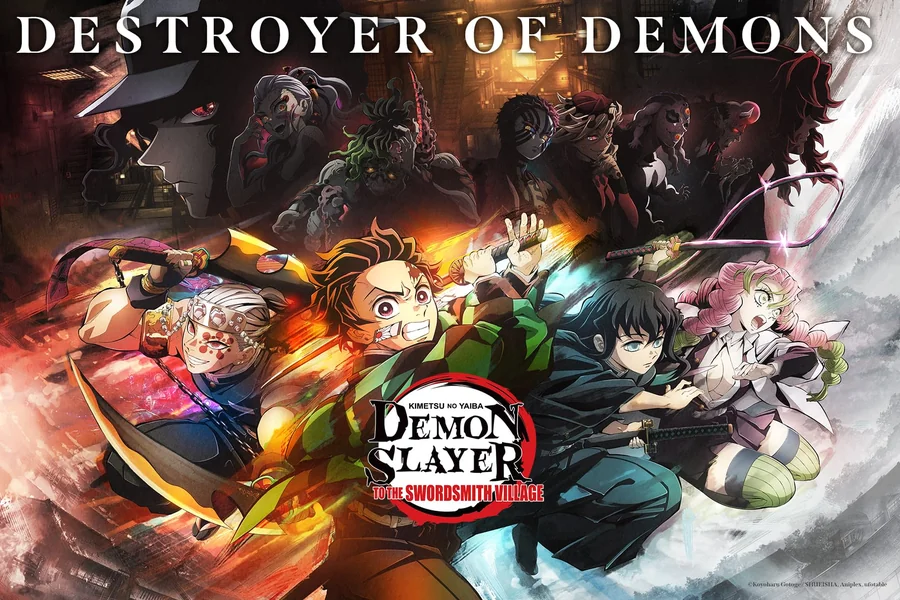

Demon Slayer Movie End Credits are not those background images that are rolling at the end of the story. They belong to the narrative experience. It is common knowledge that a lot of viewers are anticipating either a brief post credits thing or an enjoyable bonus moment. Rather this film goes another way. The story is followed in a strong yet silent manner by the end credits.
To the fans of Demon Slayer this decision would be quite deliberate and emotional. The tension is not interrupted by the credits. They extend it. The film has faith in the audience to sit back and take in whatever follows next. The design creates a feeling of anticipation and respects the weight of the Infinity Castle arc.
How Demon Slayer Movie End Credits Are Structured
Demon Slayer Movie End Credits is not a regular anime ending. Final battle and credits do not have a distinct separation. The names rolling over mix directly with the visuals and scenes. Music proceeds on a solemn note. The rhythm is slowed down yet the narrative does not cease.
There is a text between roll credits scenes. These are brief but significant moments. They depict the characters responding to loss injury and the reality of what is yet to come. There is no relief to the audience. Rather they are reminded that the war is by no means over.
This format makes this movie not related to previous formats. Taisho Era Secret segments have been used frequently to create humor in the anime. The film opts to be serious and to carry on. Demon Slayer Movie End Credits does not break the story but completed it.
Hashira Moments During the End Credits
The state of the rest of the Hashira is revealed in silent in Demon Slayer Movie End Credits. They are short scenes but heavy emotionally. Mitsuri and Obanai are portrayed as wounded and still alive. There is weariness and resolution in their lines. There is no dialogue. The silence is a self-defeat.
Inosuke and Zenitsu seem to be shattered but concentrated. The turmoil of the Infinity Castle has brought a scar on their foreheads. Kanao is depicted working on the loss of Shinobu. Her determination is shown even without a word. The grief does not explode. It settles.
These scenes rekindle the audience to the expenses of the fight. Demon Slayer Movie End Credits do not lack the space to reflect. They demonstrate that it is possible to remain strong despite the weakness of hope.
Muzan Reveal and Its Meaning
The short appearance of Muzan is one of the most significant aspects of Demon Slayer Movie End Credits. He is not shown in full action. Rather he is pictured within a throbbing cocoon within the Infinity Castle.
This image is unsettling. It implies change and not stagnation. Muzan is less a human being and more a monster than ever. The cocoon suggests a power of growth and unavoidability. It also establishes his position that proves vital to the next step.
The choice to present Muzan in such a manner creates fear. Demon Slayer Movie End Credits are not shock based. They rely on atmosphere. The cocoon symbolizes the last step to asconfrontation. It gives the message that the end is at hand but not here yet.
Difference Between Movie Credits and Anime Endings
Demon Slayer Movie End Credits are very different in comparison to the anime version. The television series endings usually contained jokes about the character or light hearted extras. These are parts that assisted in offsetting some sharp scenes.
The film eliminates that consolation. There is no Taisho Era Secret. No buffoonery of transition. The tone is not light-hearted till the end. This decision does not ignore the seriousness of the Infinity Castle arc.
The film retains emotional momentum by incorporating the use of story in the credits. The Demon Slayer Movie End Credits is not an independent piece of work but an extension of the last act. This style is in line with cinematic narration and not episodic.
The Final Mural and Its Symbolism
Something special is shown at the very beginning of Demon Slayer Movie End Credits. Once the credits come to an end, a still mural of the Hashira is displayed. It is quiet and beautiful. No action. No movement. Just presence.
The mural acts as a bowing down. It commemorates the war fighters and the ones who were lost. It enables the viewers to have a breath after dramatic feelings. The style of the artwork is eternal since it stores memory.
This is a moment of paying off. The fans who remain watch the movie have no resolution. The mural fails to clarify things. It evokes in the audience the sacrifice of unity and inheritance. Demon Slayer Movie End Credits has no noise to end with but reverence instead.
Why Staying for the Credits Matters
Demon Slayer Movie End Credits is a must watch. Not doing them results in losing emotional beats of story context and setup. The movie anticipates the audience to be there until the end.
The integrated scenes clarify the position of characters, both at the physical and emotional levels. They confirm Muzan status. They get the viewer ready to the next film and do not explicate.
Sitting down is also a way of respecting the intention of the creators. Demon Slayer: Infinity Castle is a game that requires credits as a narrative location. It is not filler. It is narrative.
Final Thought
Demon Slayer Movie End Credits is a reinterpreted form of credits. They are not an afterthought. They are a continuation. Putting moments of the story into the credits is a sign of trust in the audience and appreciation of the content.
These credits are tension building and not tension releasing. They exalt character- downed characters. They give hints of what is yet to be without telling. The last mural creates an appreciative silence.
Demon Slayer the end credits are not optional to the fans. They are part of the journey. You should not just sit through them. It is essential.
FAQs
Does the Demon Slayer movie have a post credits scene.
There is no separate post credits scene but the story continues during the credits.
Should I stay seated during Demon Slayer Movie End Credits.
Yes important story moments appear while the credits roll.
What is shown during the Demon Slayer Movie End Credits.
You see injured Hashira Muzan cocoon and setup for the next movie.
Is the Taisho Era Secret included in the movie credits.
No the movie removes humor segments to keep a serious tone.
What is the mural shown at the end of the credits.
It is a symbolic image of the Hashira honoring their unity and sacrifice.
Does the end credits set up the next film.
Yes it builds anticipation and confirms the direction of the final battle.
Are Demon Slayer Movie End Credits different from the anime.
Yes the movie integrates story into credits rather than adding bonus scenes.